


Dual citizenship and multiple home countries
Two passports, a home on each side, tax exposure in both — Bounded handles the split-country life well, but the setup is not obvious, because there is no “second citizenship” field. Here is the mental model.
Citizenship isn't a setting — rules are
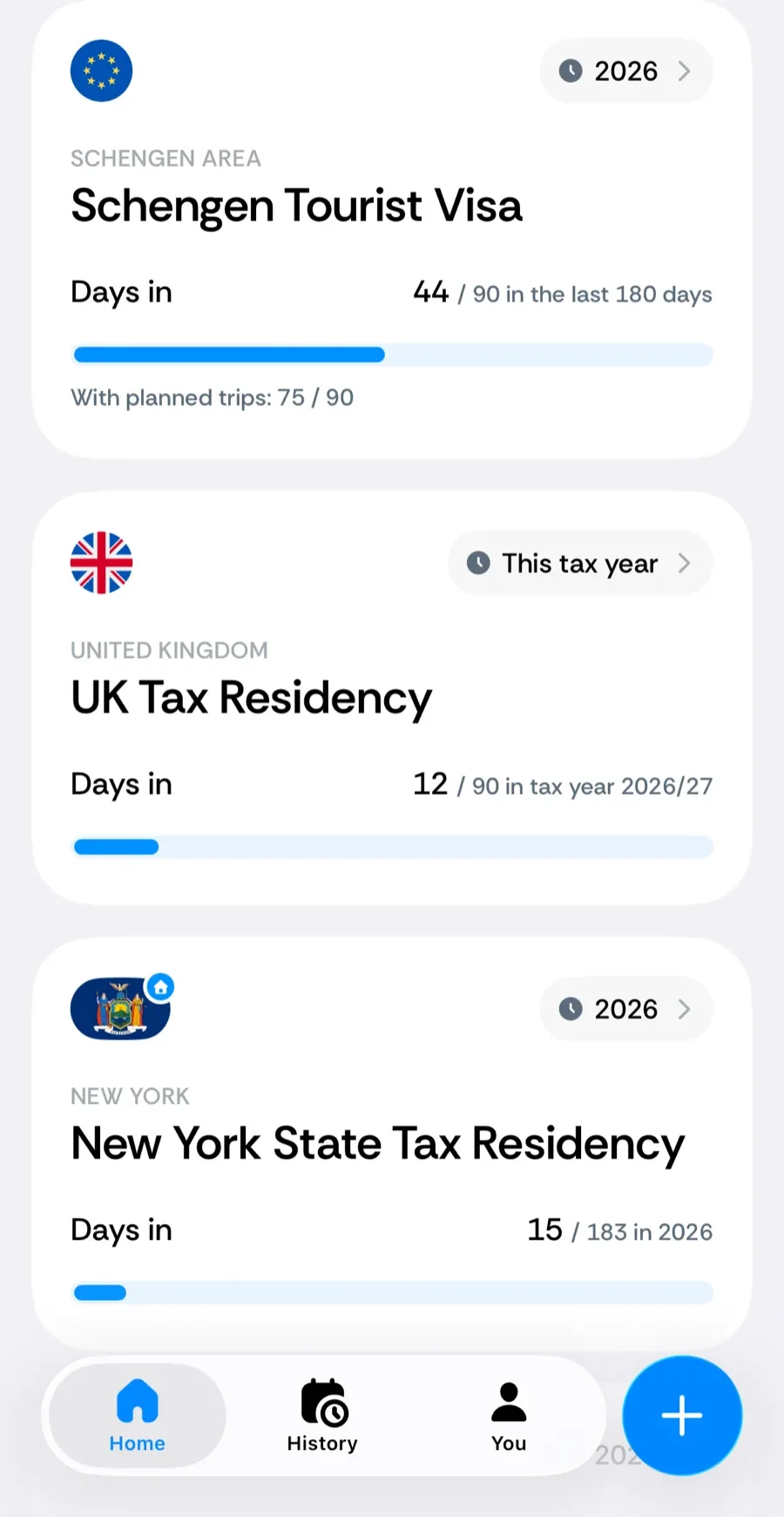
Bounded never needs to know what passports you hold. Citizenship matters only through the rules it exposes you to — and each rule is a counter. A dual US/NZ citizen managing both tax nets runs two counters side by side: US Tax Residency (the weighted Substantial Presence Test) and New Zealand Tax Residency — each with its own window, each computed from the same timeline. Add each one from the counter catalog (+ in the tab bar → Add a counter, or search for the country by name), and long-press a card on Home to put the rule closest to its limit on top.
Which country is the home base?
The home base is a counting default, not a declaration of allegiance: days without travel evidence are credited to it. Pick the country where you physically spend the most unrecorded time — usually where your main home is. If life is genuinely split with no majority side, choose the one whose day count matters more to get right by default, or use Nomad mode and keep the record purely evidence-based.
Common split-country setups
- Citizen of A, resident of B — home base B; counters for B’s presence rules (PR maintenance, tax) plus A’s tax net if it follows you (US citizens: the US taxes worldwide income regardless — the FEIE counter is the one to watch).
- Two tax exposures — one tax counter per country, each on its own calendar (fiscal years differ — see recipes).
- Keeping a status while living elsewhere — home base where you live, absence counters for the status you’re protecting (Green Card, settled status, a residence permit).
Related articles
Can’t find what you’re looking for? We answer every message.
Contact support